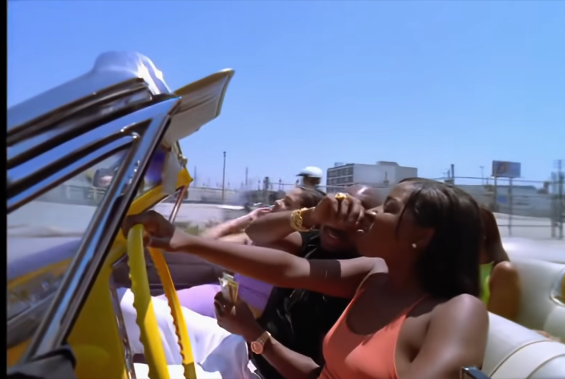
Tupac’s Cousin Reveals Vegas Red Flags Before Shooting
2Pac’s Cousin Details Suspicious Vegas Ride: “Suge Knight Told 2Pac Not To Bring His Bulletproof Vest”
More than two decades after the murder of Tupac Shakur, new firsthand testimony continues to surface—adding layers to one of hip-hop’s most scrutinized nights. In a revealing interview with The Art of Dialogue, conducted by contributor Delray Richardson, Tupac’s cousin Jamala Lesane revisits the chain of events leading up to the fatal Las Vegas shooting and outlines what she describes as multiple “red flags” that still trouble her today.
Speaking calmly but candidly, Lesane offers a rare insider perspective from someone who was physically present during the trip preparations and drive to Las Vegas—details that challenge long-circulating assumptions about Tupac’s security and decision-making that night.
A Sudden Shift in Plans: Atlanta vs. Las Vegas
According to Lesane, Tupac initially intended to travel to Atlanta to address a serious family matter involving a stolen firearm. She explains that Tupac was frustrated and emotionally worn down by ongoing family struggles and wanted to deal with the situation directly.
However, she claims Suge Knight strongly discouraged that plan.
Suge allegedly insisted Tupac postpone the Atlanta issue and continue with the Las Vegas trip instead—pressuring him to move forward with the Mike Tyson fight weekend.
In hindsight, Lesane says this insistence marked the first moment that made her uneasy, even if she did not fully grasp its significance at the time.
“You Don’t Need Your Vest”: A Critical Decision
One of the most alarming claims in the interview centers on Tupac’s bulletproof vest.
Lesane states unequivocally that Tupac always traveled with his vest—yet on this trip, he did not have it.
“Suge told Pac he didn’t need it,” she explains, recalling Knight reassuring Tupac with, “I got you.”
Lesane confirms from firsthand knowledge that Tupac did not bring his bulletproof vest to Las Vegas, directly contradicting persistent rumors that he was wearing or had access to one that night.
For many observers, this single detail raises profound questions about judgment, influence, and risk in the hours leading up to the shooting.
No Gun, Limited Protection
Lesane further dispels another widespread myth: that Tupac was armed.
According to her account:
-
Tupac had no personal gun on him.
-
His longtime bodyguard, Frank Alexander, was allegedly instructed that he could not carry his pistol while in Las Vegas.
This left Tupac—one of the most visible and controversial figures in the world at the time—effectively unarmed and surrounded by restrictions on his security detail.
“Something Felt Off”: Observed Body Language
While waiting outside the Calabasas house before departure, Lesane recalls sitting with Kadada (Kidada Jones). She says Kidada became increasingly uneasy while observing Suge Knight sitting in his car on the phone.
“She kept saying he could be plotting something and we wouldn’t even know,” Lesane recounts.
At the time, Lesane admits she dismissed the concern—excited about her first trip to Las Vegas. Only later did those observations take on heavier meaning.
The Desert Stop That Still Raises Questions
Perhaps the most striking revelation comes from the drive itself.
Lesane describes a massive caravan—approximately 40 vehicles—heading to Las Vegas. Along the way, the group made an unexpected stop in the desert to meet David Kenner, Death Row Records’ attorney.
“It looked like some mafia, Godfather-type meeting,” she says, struggling to contextualize the moment even now.
The stop was brief, unexplained, and unusual enough to stand out vividly in her memory. To Lesane, it felt secretive—out of place during what was supposed to be a celebratory trip.
Belief Formed Through Experience, Not Rumors
When asked directly whether she ever believed Suge Knight may have been involved in Tupac’s death, Lesane does not rely on internet speculation or secondhand theories.
“Yes, I did believe it—but for my own reasons,” she says.
Those reasons, she emphasizes, are rooted entirely in what she personally witnessed: the altered travel plans, the absence of the vest, the lack of weapons, the restrictions on security, the odd desert meeting, and the uneasy behavior she observed in real time.
Why This Testimony Still Matters
Lesane’s account does not claim definitive answers. Instead, it provides something arguably more valuable: a clear, chronological eyewitness perspective from inside Tupac’s circle during his final hours.
In a case clouded by misinformation, myth-making, and conflicting narratives, her testimony sharpens the focus on process, decision-making, and power dynamics—not just the shooting itself.
As renewed interest in Tupac’s murder continues across documentaries, court proceedings, and media investigations, voices like Jamala Lesane’s remind us that history is not only shaped by what happened—but by who was there to see it unfold.
Share this content:





Post Comment