
Jesse Jackson, Civil Rights Giant Who Inspired Generations With “You Are Somebody,” Dies
The world is mourning the passing of Jesse Jackson, the longtime civil rights leader, presidential candidate, and founder of the Rainbow PUSH Coalition. For more than six decades, Jackson stood on the frontlines of the fight for racial justice, economic equity, voting rights, and Black political empowerment.
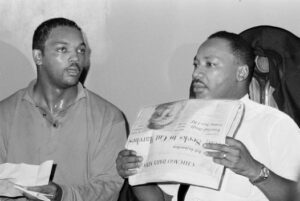
His voice — booming, rhythmic, unapologetic — became one of the defining sounds of modern Black activism. From marching alongside Dr. Martin Luther King Jr. to running historic presidential campaigns in 1984 and 1988, Jackson transformed protest into political power.
As we observe Black History Month, his legacy feels especially profound. Jesse Jackson didn’t just demand change — he inspired generations to believe they mattered.
From Civil Rights Foot Soldier to National Leader
Jackson rose to national prominence as a young organizer within Dr. King’s Southern Christian Leadership Conference (SCLC). After King’s assassination in 1968, Jackson carried forward the mission of economic justice and Black self-determination.
In 1971, he founded Operation PUSH (People United to Save Humanity), which later became the Rainbow PUSH Coalition — a multiracial movement focused on economic inclusion, corporate accountability, and political participation.
His 1984 and 1988 presidential campaigns were watershed moments. Jackson became one of the first Black candidates to mount serious, nationwide bids for the White House, winning millions of votes and expanding the Democratic electorate. His campaigns mobilized young voters, working-class communities, and people of color in ways that reshaped American politics.
“You Are Somebody”: Jesse Jackson on Sesame Street
View this post on Instagram
One of Jackson’s most enduring cultural moments wasn’t at a rally — it was on children’s television.
In a powerful appearance on Sesame Street, Jackson led children in chanting:
“I am somebody.
I may be poor, but I am somebody.
I may be young, but I am somebody.”
The affirmation became iconic. It wasn’t just a feel-good moment — it was radical messaging wrapped in accessibility. At a time when Black children were often marginalized by media and society, Jackson spoke directly to their dignity.
And yes — the roots of Sesame Street align with that mission.
When Sesame Street debuted in 1969, it was intentionally designed to help children from underserved, urban communities — particularly Black and Latino children — gain access to early childhood education through television. Created by Joan Ganz Cooney and the Children’s Television Workshop, the show blended entertainment with educational research, aiming to close opportunity gaps in literacy and numeracy.
Jackson’s appearance on the program fit perfectly within that framework: affirm identity, build confidence, and nurture possibility.
A Black History Month Reflection
Jesse Jackson’s life represents the arc of modern Black political progress — from the marches of the 1960s to the ballot boxes of the 1980s and beyond.
He fought for:
-
Voting rights expansion
-
Corporate diversity and economic inclusion
-
Prison reform
-
International human rights advocacy
-
Educational equity
His message was consistent: dignity is not negotiable.
During Black History Month, it’s powerful to remember leaders who bridged activism and mainstream visibility. Jackson understood the importance of being present everywhere — in churches, in streets, in boardrooms, on debate stages, and even on children’s television.
He wasn’t just fighting systems. He was shaping self-perception.
Cultural Impact Beyond Politics
Pierre Thomas looks back at the life and legacy of the civil rights activist Rev. Jesse Jackson. pic.twitter.com/uq6E328Elk
— Good Morning America (@GMA) February 17, 2026
Jackson’s cadence influenced hip-hop preachers, political orators, and community organizers as reported by GMA. His Rainbow Coalition concept foreshadowed today’s multicultural political movements. His presidential campaigns paved the way for future candidates of color.
And perhaps most importantly, his “I Am Somebody” affirmation still echoes in classrooms, youth programs, and Black households across generations.
Share this content:







Post Comment