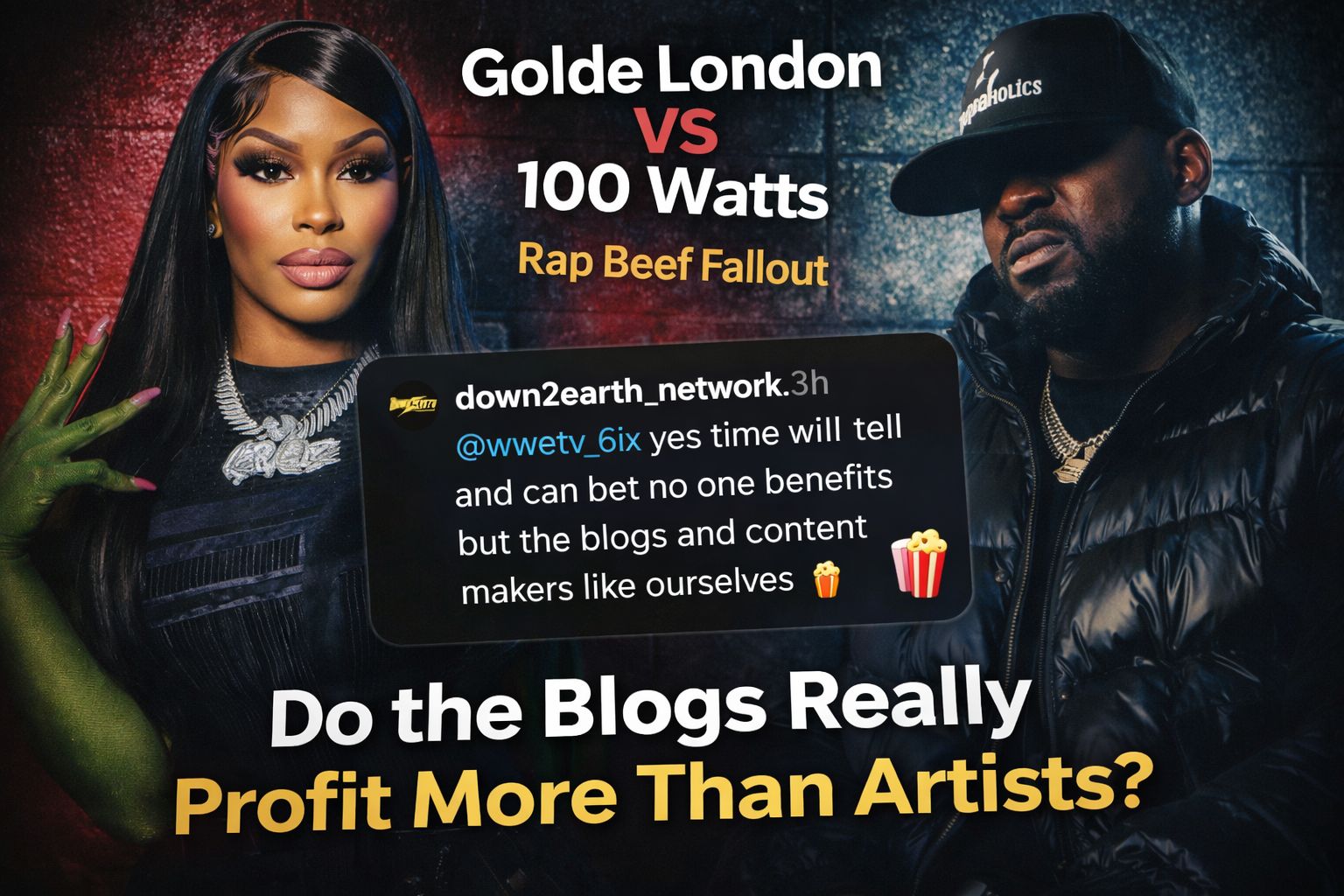
Do Blogs Benefit More Than Artists? Toronto Hip-Hop Media Debate
Do Blogs Really Benefit More Than Artists? Rethinking Media’s Role in Modern Hip-Hop Culture
As Toronto hip-hop debates flare up online, a familiar question keeps resurfacing: who actually benefits when rap beefs, diss tracks, and public disputes dominate the conversation — the artists, or the blogs and content creators covering them?
It’s a fair critique, especially in an era where clips travel faster than full songs and commentary often outpaces the music itself. But the reality is more nuanced than a simple “blogs profit, artists lose” narrative.
The Longstanding Role of Media in Hip-Hop
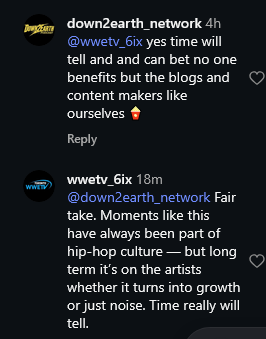
From its earliest days, hip-hop has been inseparable from documentation. Mixtape DJs, street reporters, magazines, radio hosts, and later blogs all played a role in preserving moments that might otherwise have disappeared. Battles, rivalries, and competitive clashes weren’t side effects of the culture — they were part of its fabric.
Ignoring those moments entirely wouldn’t “protect” hip-hop; it would erase pieces of its history. Media didn’t invent rap conflict — it recorded it.
Visibility Doesn’t Equal Progress
That said, coverage alone doesn’t guarantee growth. Attention can amplify a moment, but it can’t convert that moment into career momentum. Streams, touring success, brand deals, and long-term fan loyalty still depend on how artists move after the spotlight arrives.
This is where the disconnect often happens. A viral moment may generate clicks for blogs and podcasts, but whether it becomes a stepping stone or a dead end rests largely with the artist — their strategy, their music, and their ability to redirect attention into something sustainable.
The Social Media Acceleration Problem
View this post on Instagram
What’s changed most isn’t media’s presence, but speed. Social platforms compress timelines so dramatically that reactions, rebuttals, and responses unfold within hours. This rapid escalation blurs the line between cultural documentation and real-time spectacle.
For media outlets, the challenge becomes balance:
-
Report what’s happening without inflaming it
-
Provide context without editorializing
-
Avoid turning every moment into manufactured outrage
Done responsibly, coverage can inform rather than exploit.
ALSO CHECK OUT DETAILED HISTORY OF GOLDE LONDON VS. 100 WATTS TORONTO BEEF
Blogs, Podcasts, and the “Benefit” Question
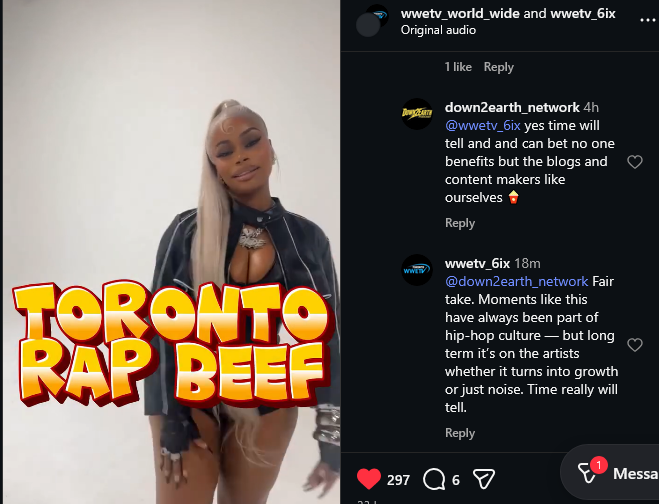
Yes — blogs and content creators gain engagement from high-interest moments. That’s unavoidable. But engagement isn’t the same as exploitation. Many platforms are run by people embedded in the culture — DJs, journalists, podcasters, and artists themselves — who see documentation as preservation, not profiteering.
The bigger issue is expectation. Media can spotlight a moment, but it can’t carry an artist forward. When growth doesn’t follow, frustration often gets misdirected toward coverage rather than the larger ecosystem challenges facing independent artists.
A Shared Responsibility
If there’s a takeaway from these recurring debates, it’s this:
-
Artists decide whether attention becomes momentum or noise
-
Audiences decide what they reward with clicks and discussion
-
Media decides how responsibly it frames the moment
When any one of those elements slips out of balance, the culture feels distorted.
Final Thought
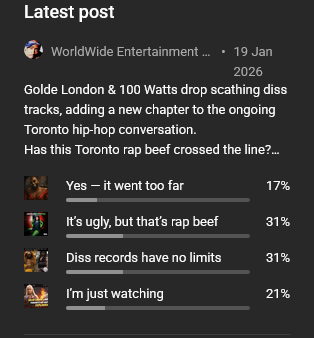
Hip-hop has always thrived on tension, competition, and conversation. The question isn’t whether blogs should cover these moments — it’s how they do so, and what happens after the coverage fades. Media attention may shine the light, but it’s the artist who ultimately chooses where to walk once the spotlight moves on.
In Toronto and beyond, that distinction matters more now than ever.
Share this content:








Post Comment