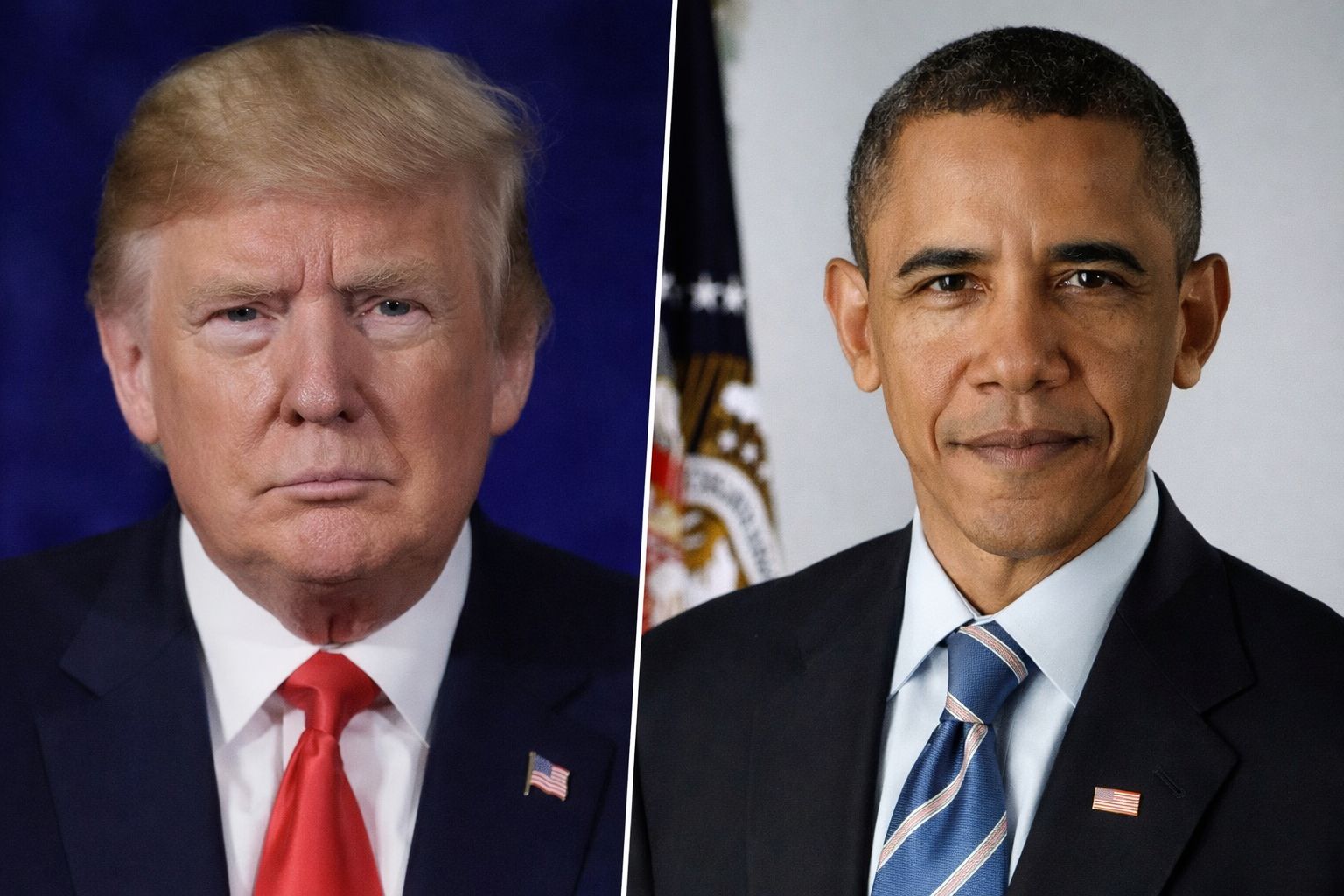
Backlash Erupts After Trump Circulates Racist Video Targeting Obama
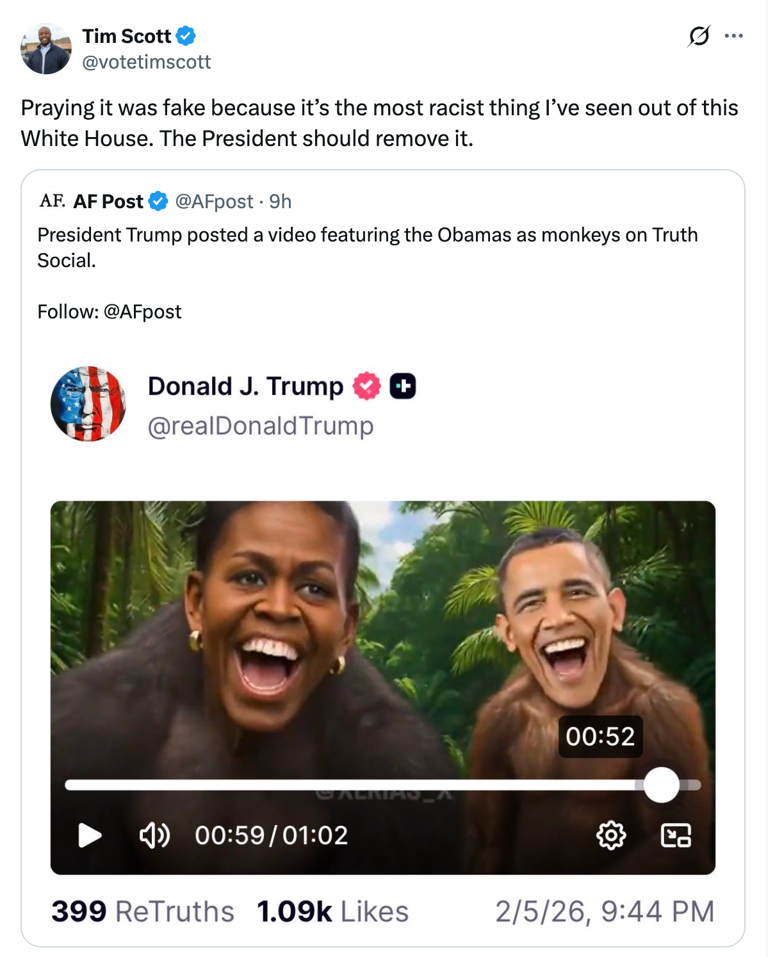
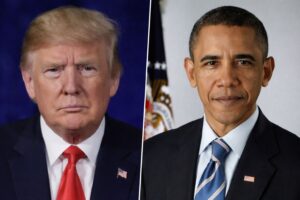
President Donald Trump is facing widespread condemnation after posting a video on Truth Social that depicts former President Barack Obama and former First Lady Michelle Obama using imagery long associated with racist dehumanization.
The video, which circulated briefly before being widely reported by media outlets and commentators, immediately sparked backlash across political and civil rights circles. Critics argue the imagery echoes historical tropes used to demean Black individuals and represents a serious breach of decorum by a sitting president.
Immediate and Bipartisan Condemnation
Reaction to the post was swift, including from within Trump’s own party. U.S. Senator Tim Scott, a Republican, publicly denounced the video, writing on social media:
“Praying it was fake because it’s the most racist thing I’ve seen out of this White House. The President should remove it.”
Scott’s remarks added significant bipartisan weight to the criticism, underscoring concerns that the post crossed a line beyond partisan provocation and into explicit racial offense.
Civil rights advocates echoed that sentiment, warning that such imagery carries historical consequences far beyond internet outrage. Several organizations emphasized that portraying Black figures in this manner has been used for centuries to justify discrimination, violence, and exclusion.
The White House and Platform Response
As of publication, President Trump has not issued a formal apology or explanation regarding the video. The White House has also not released a detailed statement clarifying whether the post was personally approved or inadvertently shared.
Media analysts note that the controversy raises renewed questions about accountability when inflammatory content is disseminated by official or semi-official presidential channels, especially during a politically volatile period.
Why the Imagery Matters
Historians and scholars stress that the imagery at the center of the controversy is not incidental or abstract. Depictions likening Black people to animals have deep roots in pseudo-scientific racism and colonial propaganda, historically used to strip individuals of dignity and humanity.
Experts warn that when such imagery is amplified by the highest office in the country, it risks legitimizing extremist narratives and further eroding social norms around respectful political discourse.
Broader Implications for Political Culture
The incident comes amid broader debates over misinformation, radicalization, and the boundaries of acceptable political speech online. Observers say the backlash highlights a growing concern that digital engagement strategies are increasingly prioritizing shock value over responsibility — even at the presidential level.
As the nation navigates a tense political landscape, critics argue that leadership rhetoric matters not only for policy outcomes, but for the cultural standards it reinforces.
Ongoing Fallout
Calls continue for greater transparency and restraint from elected officials regarding online messaging. For many observers, the controversy is less about a single post and more about the precedent it sets when dehumanizing imagery enters official political communication.
Whether further action will be taken remains unclear, but the reaction has made one thing evident: the standards applied to presidential conduct remain a defining issue in the digital age.
Share this content:










Post Comment