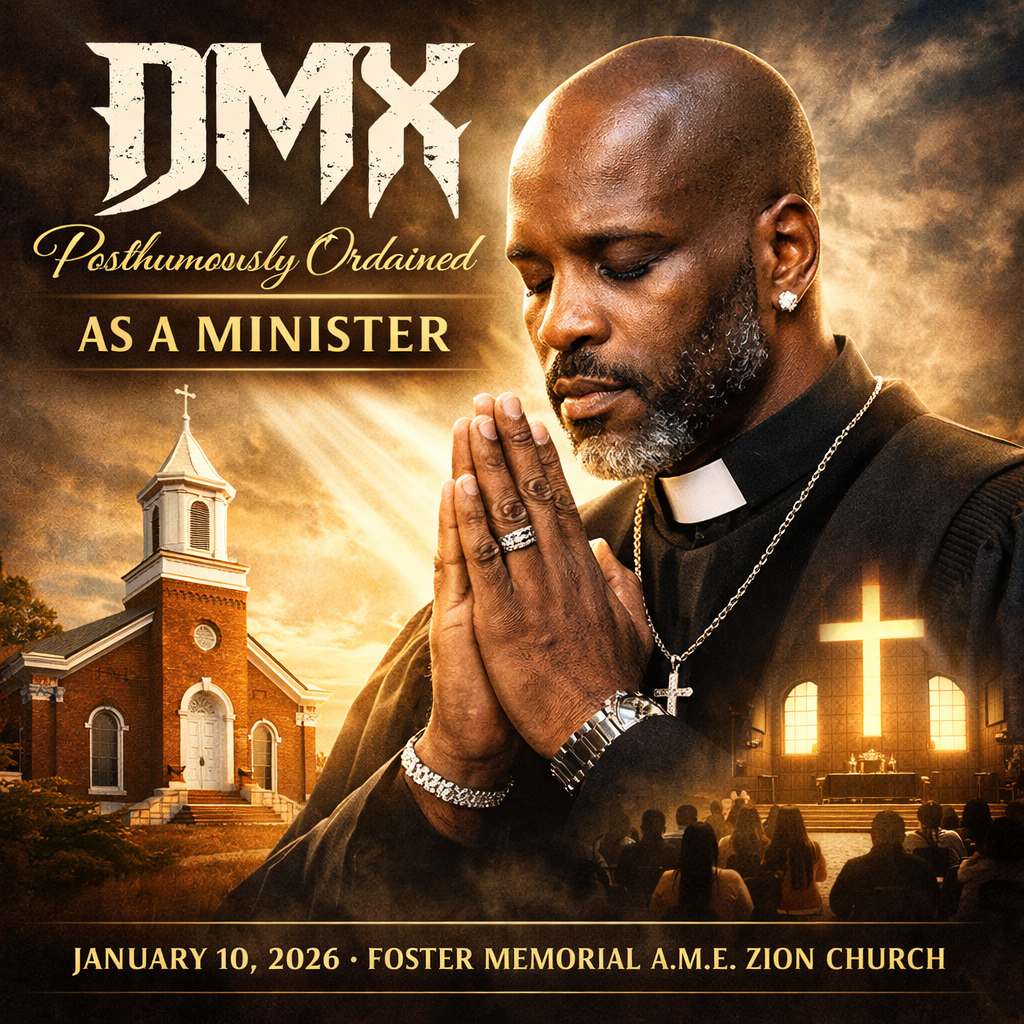
DMX’s Ministry Comes Full Circle With Posthumous Ordination Ceremony
DMX Was Ordained a Minister — Faith, Redemption, and a Lesser-Known Chapter of His Life
Hip-hop icon DMX will be posthumously ordained as a Christian minister later this month, marking a powerful and symbolic recognition of the faith-centered legacy he carried throughout his life and music.
Born Earl Simmons, DMX’s ordination took place on Saturday, January 10, 2026, at 3:00 p.m., during a special service held at Foster Memorial A.M.E. Zion Church, a 164-year-old sanctuary deeply rooted in Black history, resilience, and liberation.
A Historic Setting With Deep Symbolism
Founded in 1860, Foster Memorial A.M.E. Zion Church is one of the oldest African Methodist Episcopal Zion congregations in Westchester County and has been designated a historic landmark. The church once served as a stop on the Underground Railroad, helping enslaved people escape to freedom—making it a fitting location to honor DMX’s spiritual journey, which consistently revolved around themes of bondage, redemption, and deliverance.
The choice of venue connects DMX’s life story to a sacred space long associated with resistance, survival, and hope.
Recognizing a Ministry Lived in Public
The ordination ceremony was led by the Gospel Cultural Center, which is honoring DMX not for sermons delivered from a pulpit, but for the ministry he carried out through his music, prayers, and vulnerability.
“Earl Simmons wrestled with God in the public square, turning his pain into a ministry of raw truth,” said Bishop Dr. Osiris Imhotep, founder of the Gospel Cultural Center. “This ordination recognizes the divine calling he fulfilled every time he spoke a prayer into a microphone.”
This framing reinforces what fans have long felt: DMX’s catalog functioned as testimony—unfiltered conversations with God broadcast to the world.
Faith That Was Never Hidden
Long before this formal recognition, DMX had already been ordained as a minister during his lifetime, quietly using that authority to officiate weddings and offer spiritual counsel within his community. Faith was never a side note in his career—it was central.
From album prayers to on-stage moments of collective worship, DMX blurred the line between hip-hop performance and spiritual confession. His debut, It’s Dark and Hell Is Hot, introduced audiences to an artist unafraid to confront sin, fear, and salvation head-on. Subsequent projects continued that pattern, making prayer an unmistakable signature of his artistry.
A Legacy of Wrestling, Not Perfection
What made DMX’s ministry resonate was honesty. He never claimed moral perfection or spiritual arrival. Instead, he invited listeners into the struggle itself—addiction, trauma, faith, doubt, and accountability colliding in real time.
This posthumous ordination does not rewrite that struggle. It honors it.
It acknowledges that ministry does not always look clean or conventional—and that sometimes the most impactful sermons are delivered through pain, poetry, and prayer spoken aloud in moments of desperation.
Why This Ordination Matters
DMX’s formal recognition as a minister after his passing reframes his legacy beyond music charts and cultural impact. It positions him as a figure who ministered through authenticity, offering solace to those who saw their own battles reflected in his words.
In a genre often mischaracterized as distant from spirituality, DMX stood as proof that faith and hip-hop could coexist—raw, imperfect, and deeply human.
Share this content:





Post Comment